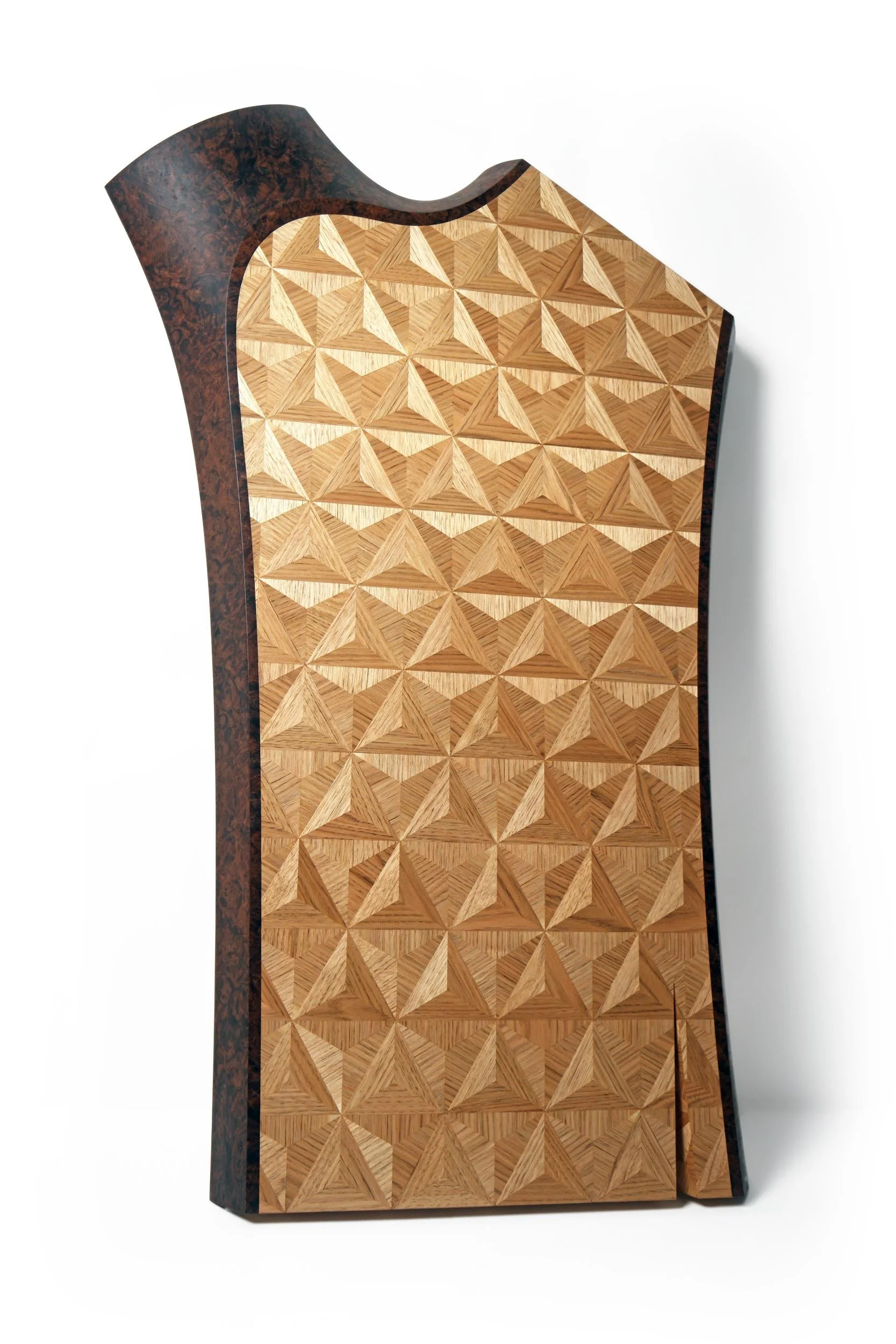
Butternut Slab
Butternut and walnut burl veneer on torsion box substrate
30”W x 46”H x 2.25”D
2025
Many of the most significant themes I’ve pursued as an artist can be traced back to the smallest moments of influence. Just one thought, image or comment that started a trickle of interest which grew into a river of impetus. One such moment occurred thirteen years ago. It was an off-hand comment made by my friend and brilliant colleague Isabelle Moore. I had just spent a week fabricating a dense composite of tiny walnut sticks. This was to be the leg stock for a small end table, and I mentioned to Isabelle that after all the labor involved in creating this “material”, I regarded it as something much more precious than walnut, more like rosewood or ebony. Isabelle’s response was simple and immediate: “Oh, it’s all precious!” As she walked away I was struck by this obvious truth. How absurd it is that we make value judgements between wood species when they are each unique! (And this is without even considering the individuality of each tree). In that moment, the idea that wood is precious was uncoupled from its cost, rarity, or visual characteristics. It was a reframing that changed the way I perceived my material. Immediately, the poplar on my workbench took on new radiance.
This sense of the inherent preciousness of wood laid the groundwork for how my perception and use of the material would continue to shift over time. As my worldview evolved to accommodate the extraordinary ecological losses of our age, the idea of wood as “precious” has become far more literal. While it’s still not a word often associated with our domestic species, I suspect this will shift as the ongoing loss of forests and tree diversity hits home. Where we have previously seen a material that is ubiquitous, abundant, and renewable, we’ll soon see something scarce, dwindling, and irreplaceable. Much about woodworking will change: wood objects will be smaller, there will be more wood jewelry, plain woods will be considered opulent, solid-wood furniture extravagant, and woodworkers will (I hope) become conservative in their use of material.
These thoughts have driven my use of veneer as a primary medium. I was first drawn to veneer because it allowed me to create intricate designs without concern for wood-movement. I treated it more like decorative paper than solid wood. With its commercial availability in many species from all over the world, veneer can seem like a material far removed from lumber, and even more so from trees and forests. But over time, I’ve come to love veneer for how it also implies the preciousness of wood and the need to conserve that which remains. When a woodworker uses veneer, they become more like a goldsmith who seeks to use as little material as possible because its worth is so high (one doesn’t see nearly as much gold ingot jewelry as log furniture, after all). Thrift acknowledges the preciousness of material, and at just 1/40th of an inch thick, veneer is a thrifty use of the best timbers.
In the field of Studio Furniture, solid-wood construction is lauded as the epitome of quality and integrity, frequently with a sense of moral superiority. “Honesty” is an oft-cited virtue of Arts and Crafts or Shaker inspired designs (compare this to veneer’s connotation as cheap and deceptive). Of course, making objects from solid wood is as much a birthright of human endeavor as growing vegetables or making tools, and it’s still practical in many contemporary contexts. But our world is changing rapidly, and as quality timbers become scarcer, woodworkers will need to rely on artifice more than materiality to bring value and meaning to their work. Unfortunately, as with most aspects of contemporary culture, there seems to be a doubling-down on consumption. The ongoing proliferation of slab furniture, for example, confounds me as both regressive in design and an egregious overuse of material. Will there come a day when a slab dining table appears as ethically misguided as a leopard-skin rug?
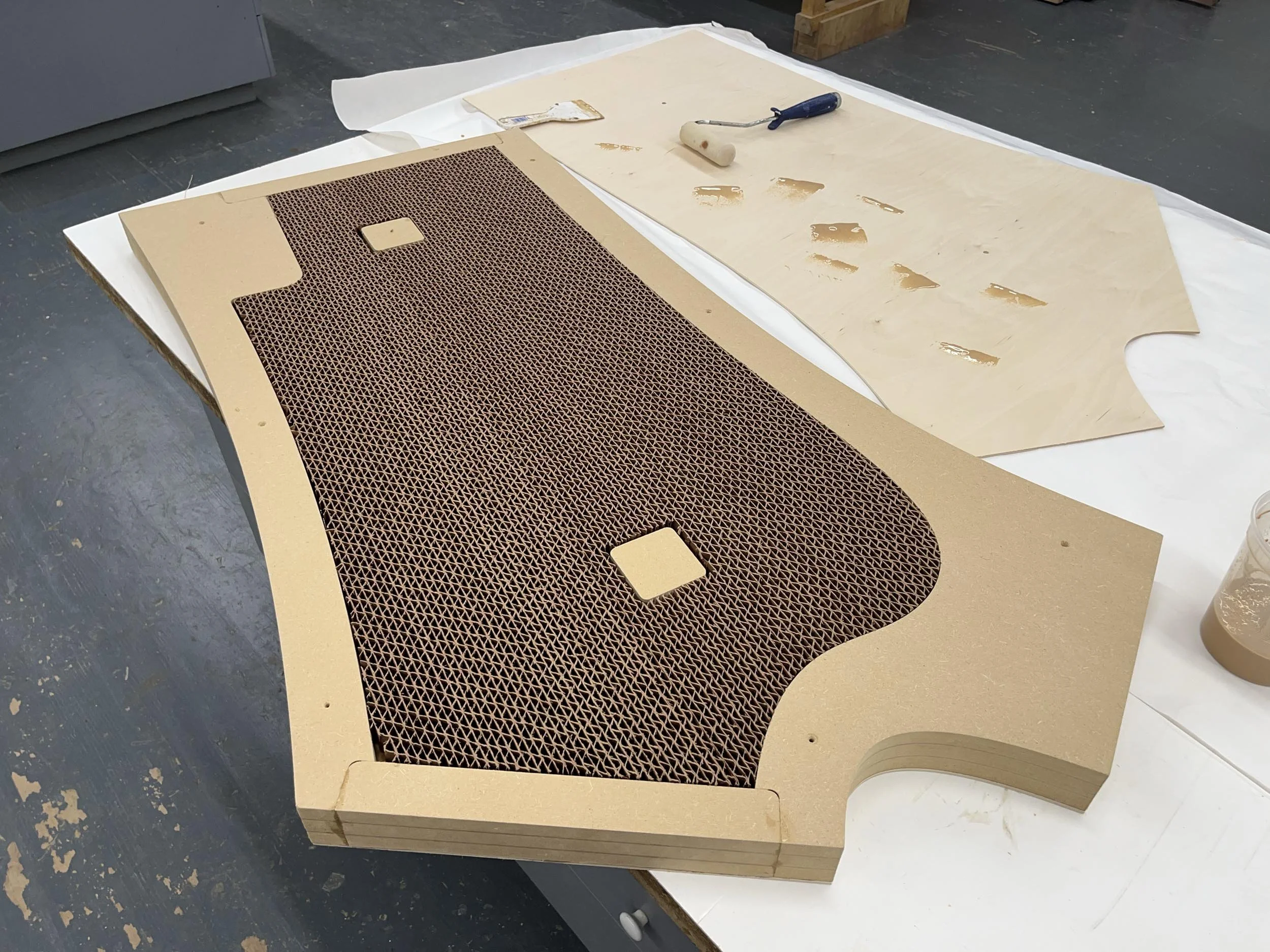
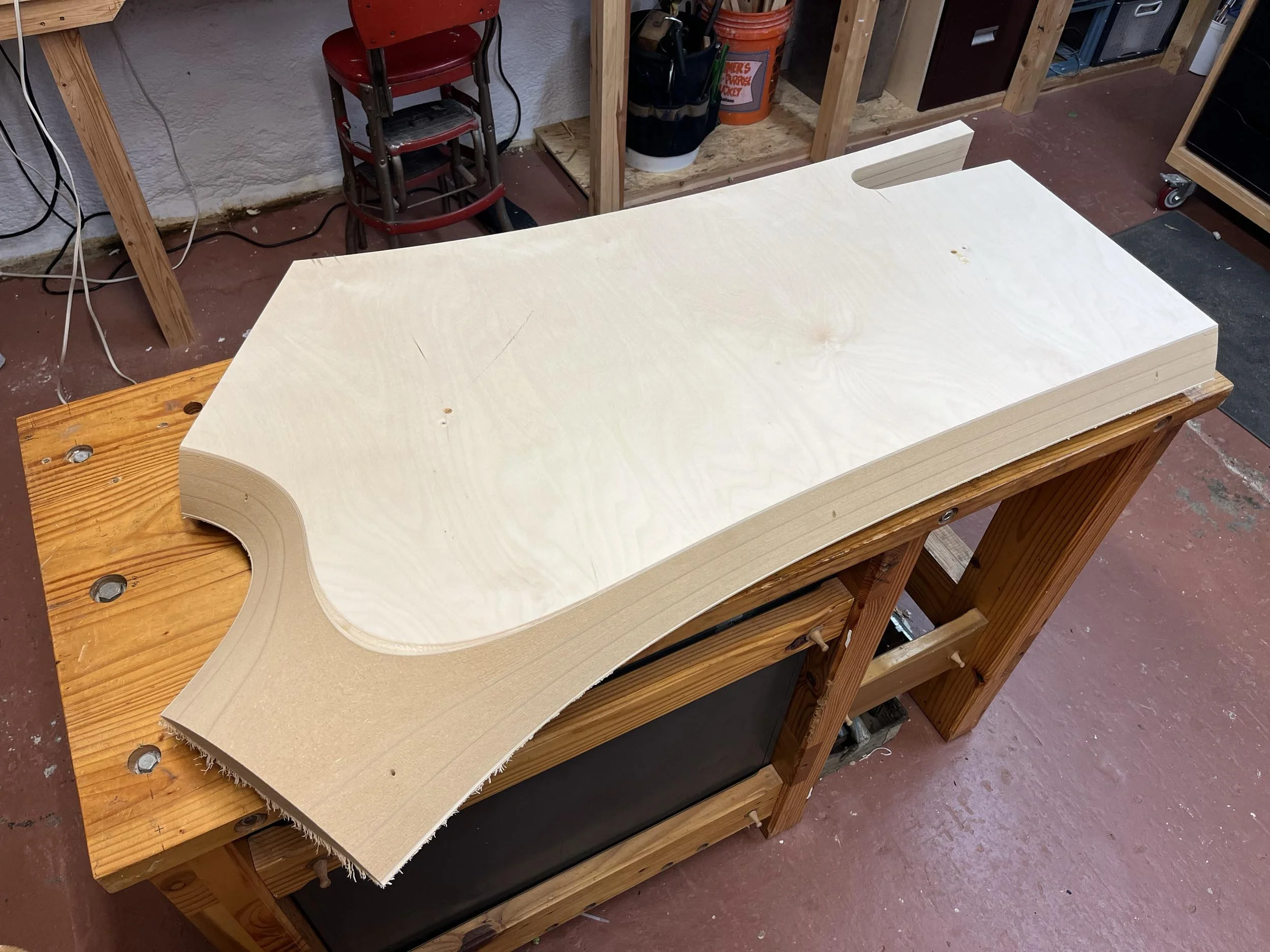
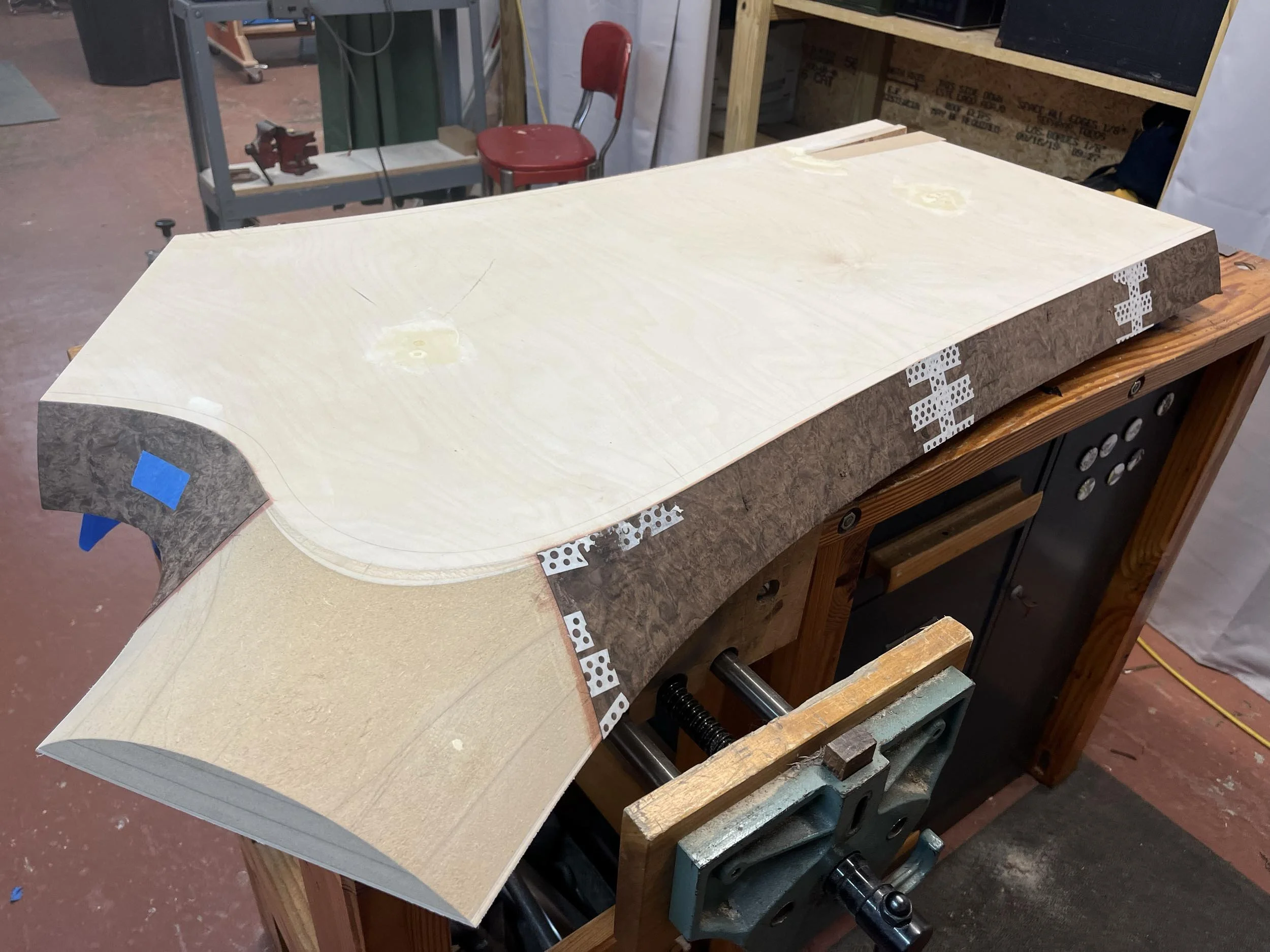
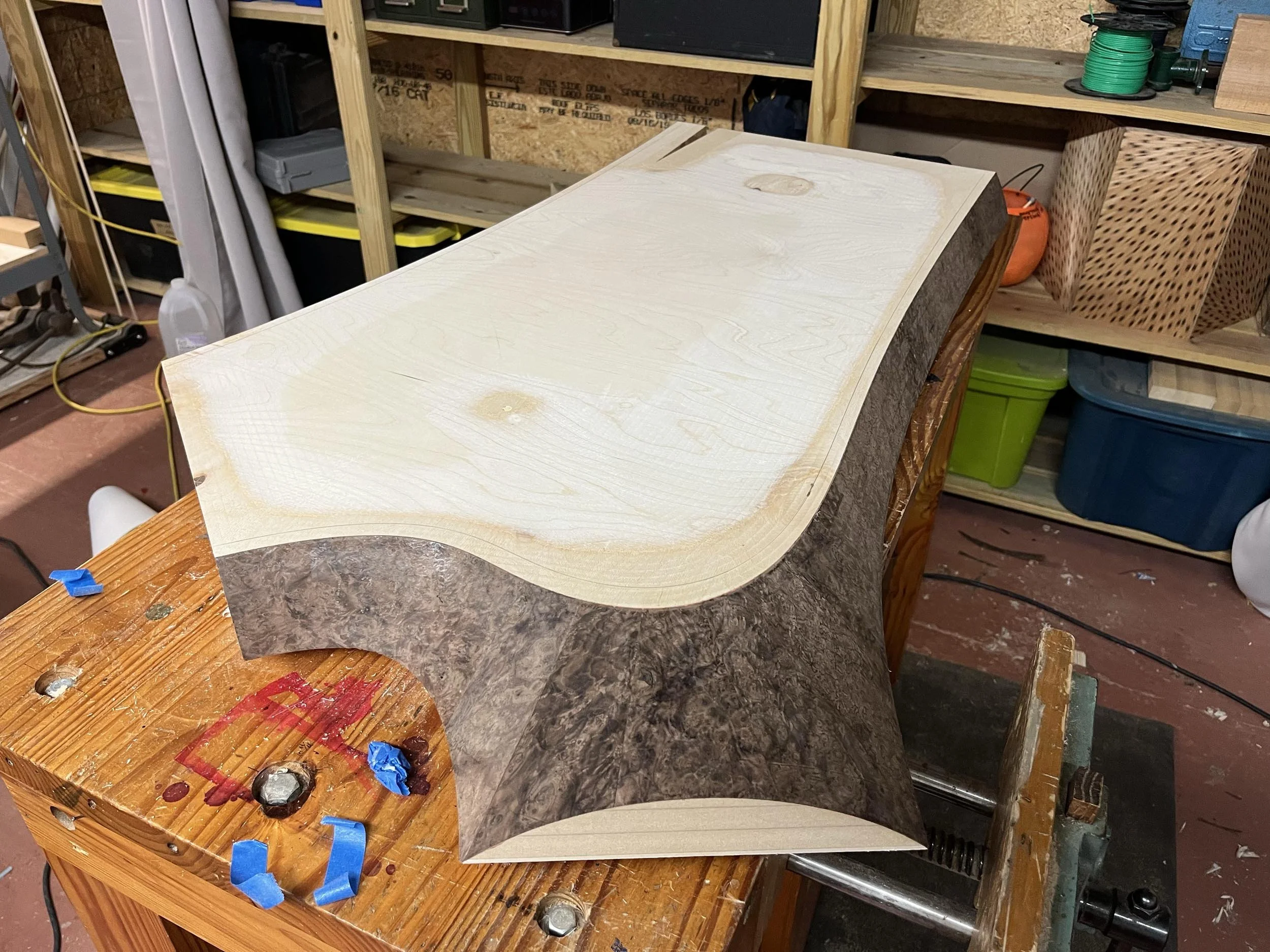
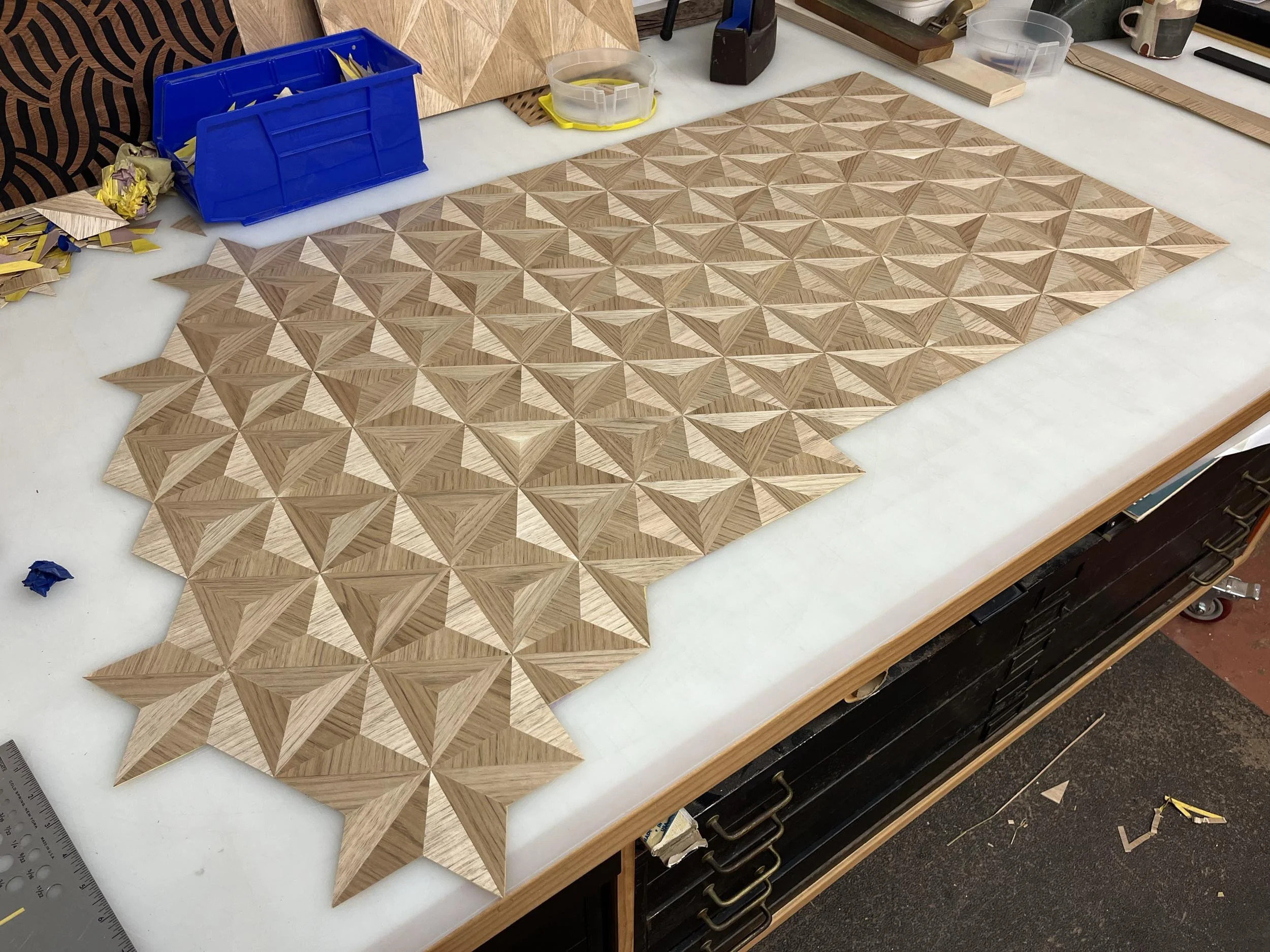
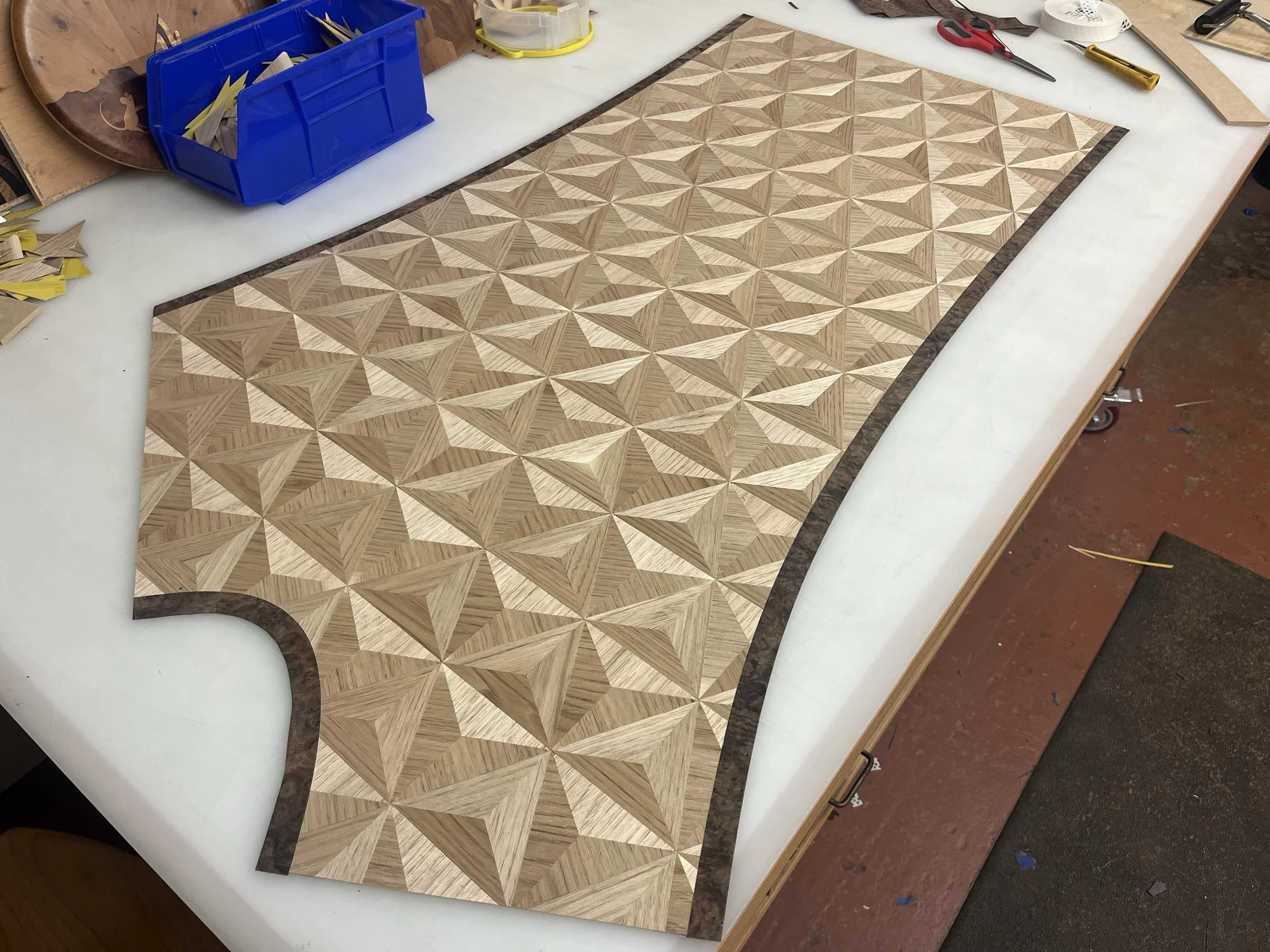
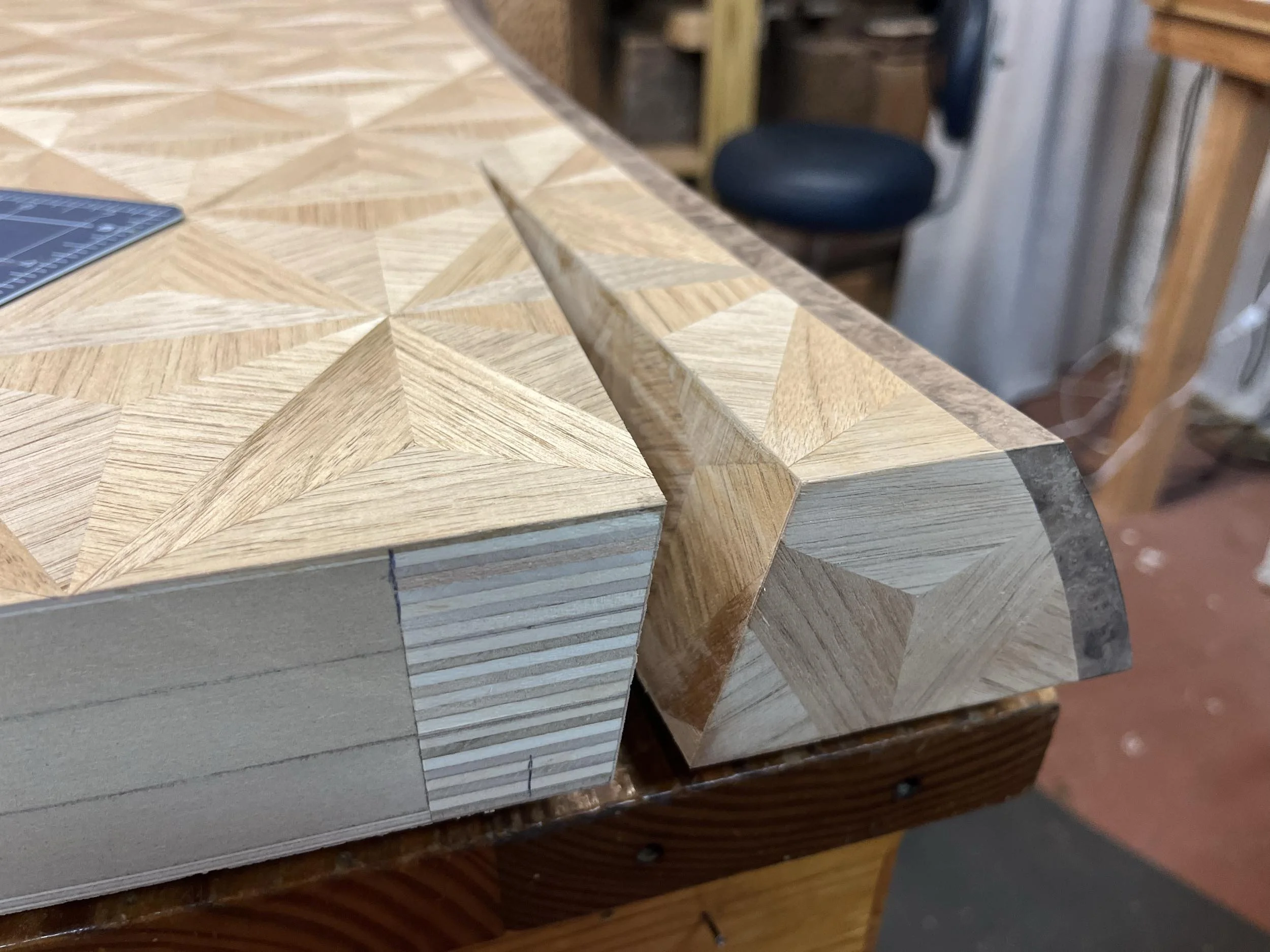
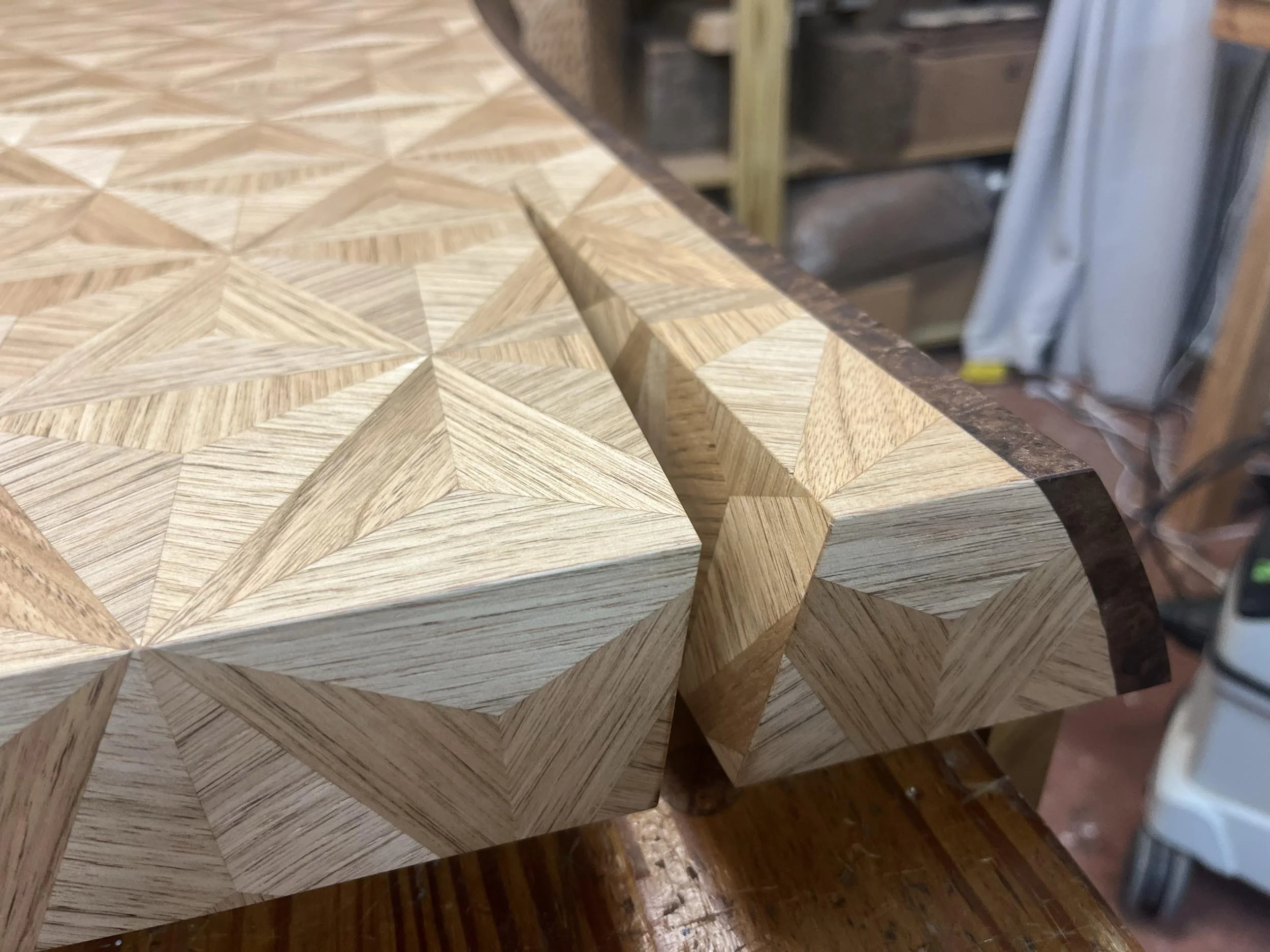
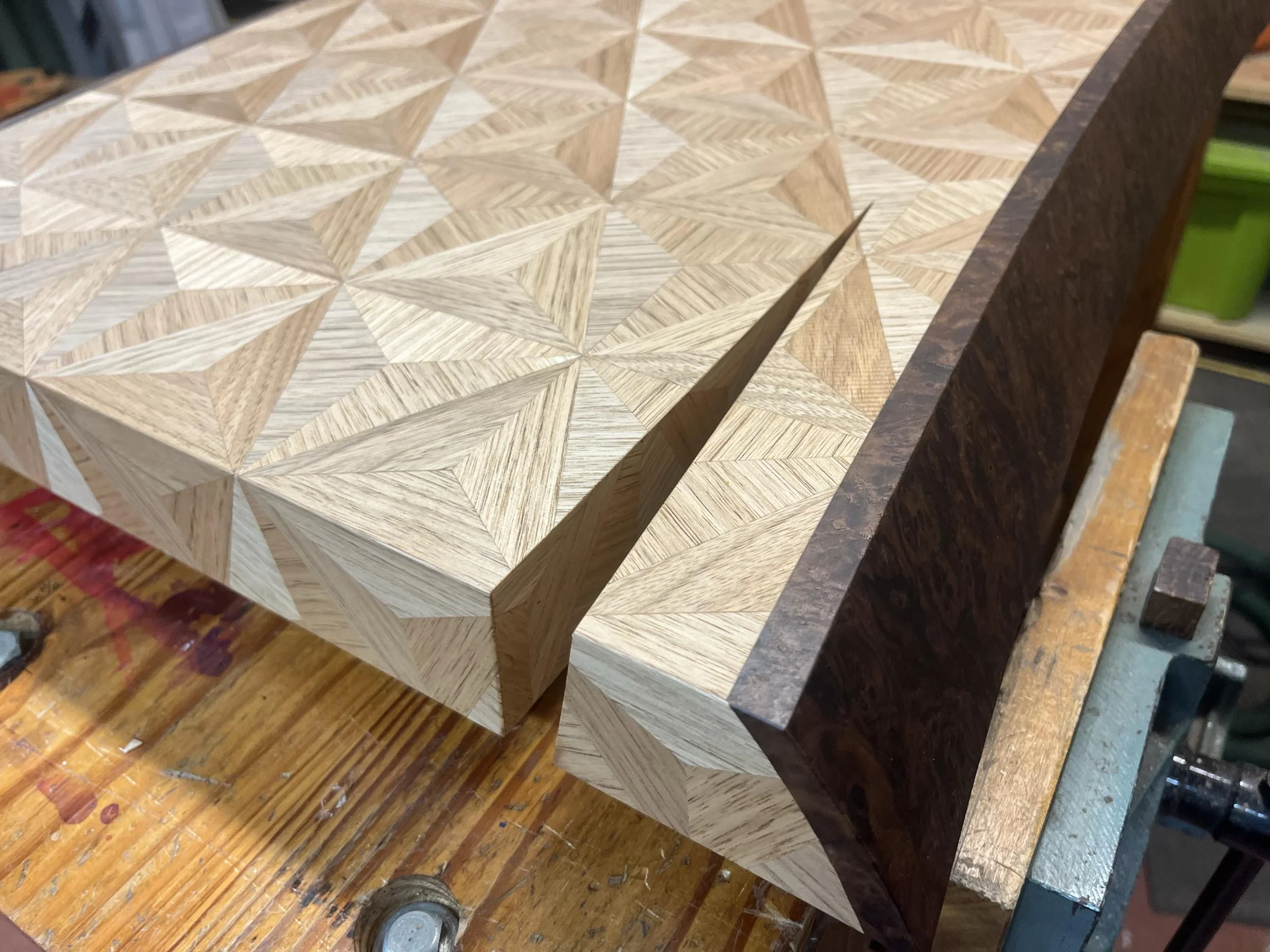
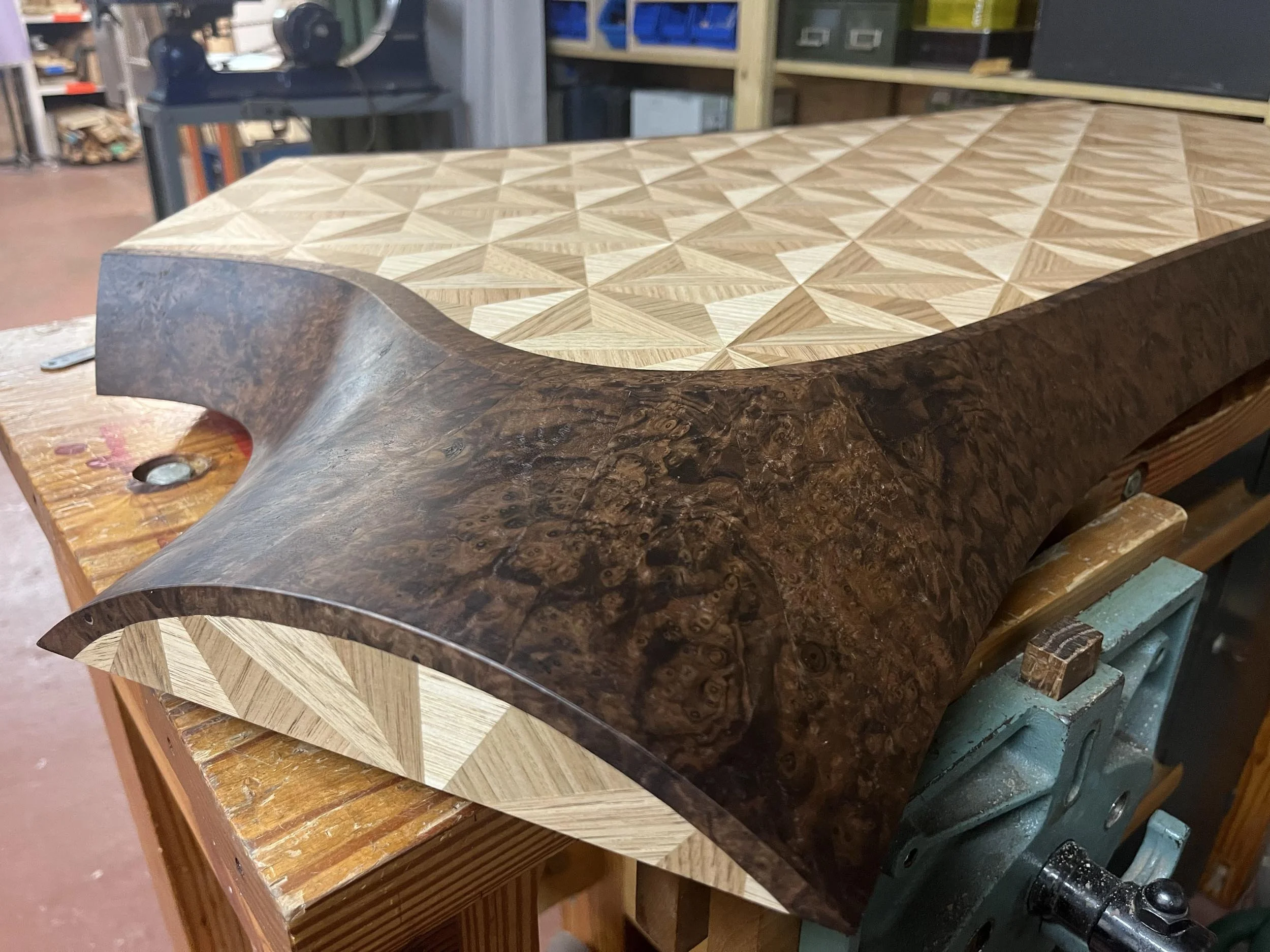
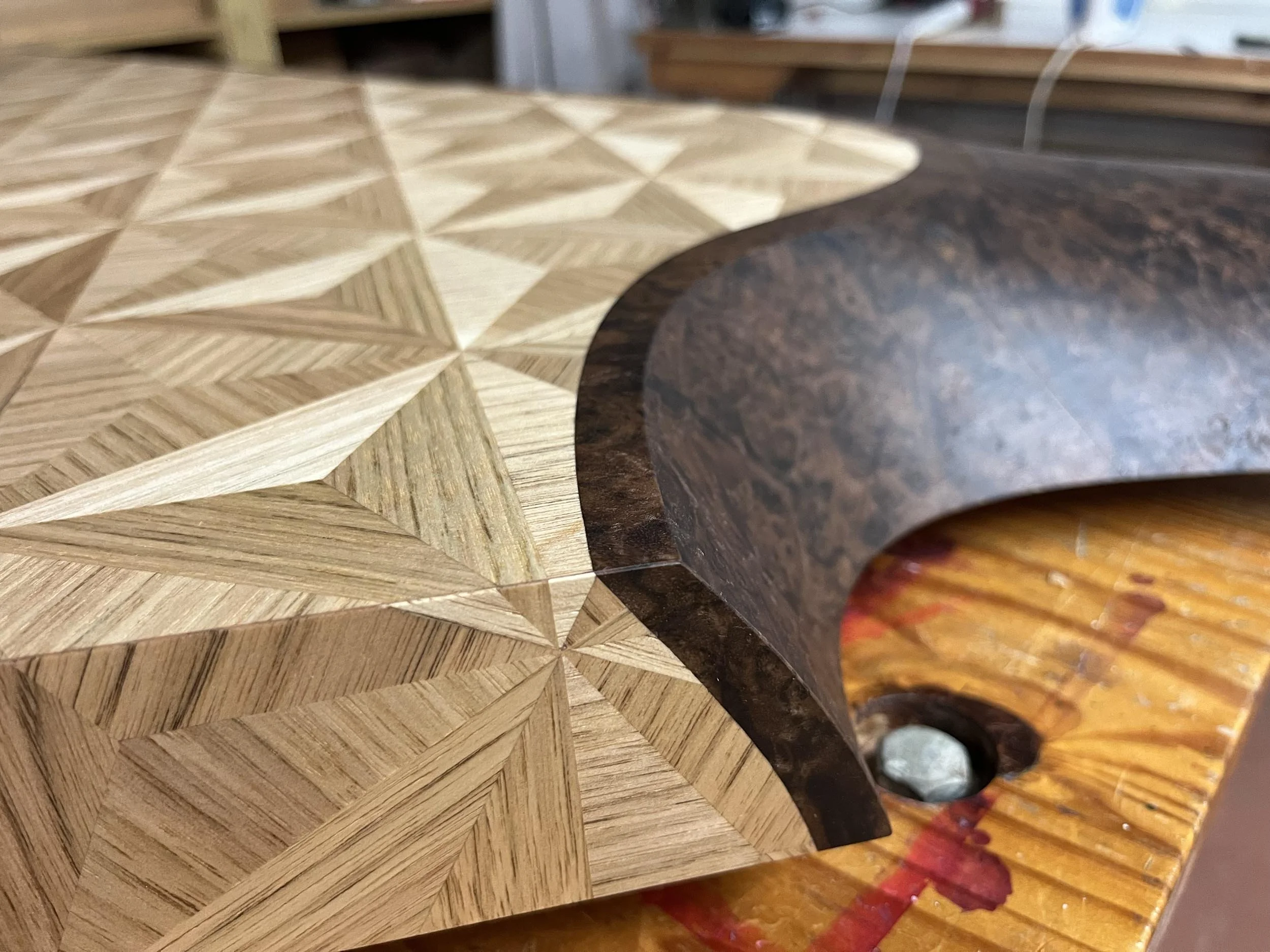
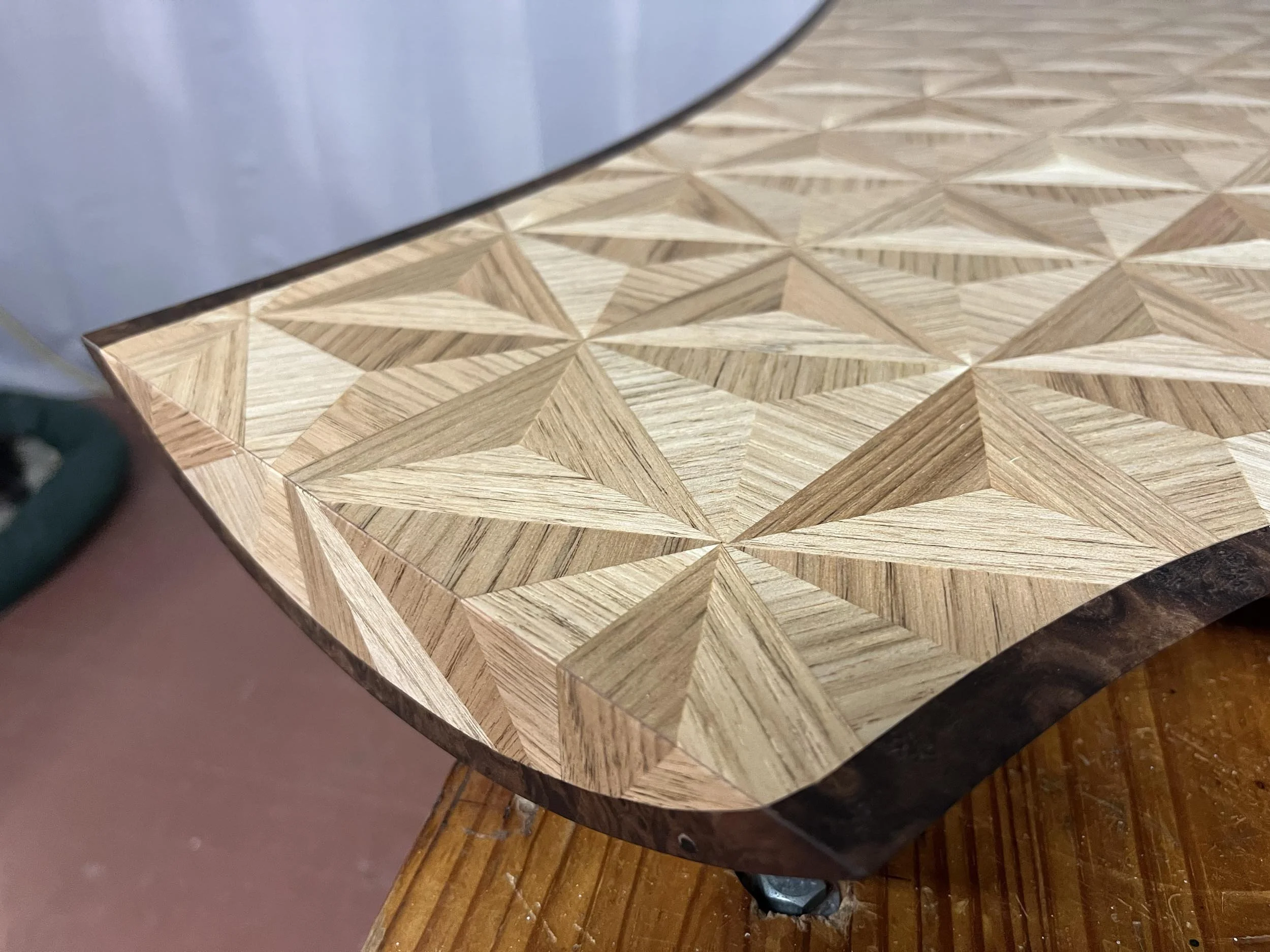
So all this brings me to the creation of Butternut Slab, one of the only pieces I have made that began with a message, rather than a design or technical exploration. Concept-based art is not my natural inclination, but the dearness of these issues and their inextricable relationship to my medium and process made this piece natural to create. The meaning is implied as much through the materials and process as through the form and imagery. In response to the ubiquitous use of slabs for furniture, I wanted to make a slab from scratch, using as little solid wood as possible. Butternut Slab is pure artifice. All the visible surfaces are veneered, while the form is an engineered torsion box made of fiberboard, paper honey-comb and extremely thin plywood. It was important to me that every surface (even the crack) be veneered, so that this piece would have no top or bottom, front or back. It is simply a piece of wood.
Butternut is an Eastern American hardwood which will likely become extinct as it succumbs to an invasive fungal disease and loss of habitat, but it is not expensive to purchase nor considered precious. Because I used veneer, the amount of butternut consumed in this piece is quite small—a few ounces—yet all its amazing qualities are evident in this thin surface: its color, grain, texture, softness, and unprecedented ability to gather and reflect light. The luminosity of the wood is accentuated by the parquetry design (a process only achievable with veneer). The surface is entirely flat; it is in the change of grain direction and interplay with light that the pattern and illusion of depth is revealed. In designing this surface, I sought to emulate the cut facets of a gemstone. Just as gold and jewels in fairy tales are often allegorical to an unseen but innate inner wealth, the ornamental surface of this piece is meant to evoke the true preciousness of ordinary wood.